Transform your operations with cutting-edge robotics and intelligent automation designed to eliminate friction and maximize efficiency. From seamless workflow integration to precision hardware, we build the smart systems that propel your business forward.
Welcome to the Industry’s Leading Industrial Automation Partner.
Many organizations use robotics without a clear strategy to maximize benefits. At Go Robo, we integrate AI with robotic automation to cut costs, boost real-time intelligence, and smartly augment your workforce.
Driving innovation through best-in-class engineering solutions.
To deliver cutting-edge robotics and automation solutions by attracting top engineering talent, fostering their innovation, and empowering them to build the future of smart manufacturing.
All your questions about the oil industry answered.
What is industrial automation, and how does it benefit modern manufacturing?
Industrial automation refers to the integration of technology, control systems (such as PLCs), software, and machinery to operate production processes automatically with minimal human intervention. It significantly increases production throughput, improves product consistency, reduces operational labor costs, and minimizes workplace hazards.
What is a Special Purpose Machine (SPM), and how does it differ from standard machinery?
A Special Purpose Machine (SPM) is a customized piece of automated machinery designed to perform a specific dedicated task for a unique product manufacturing requirement. Unlike standard off-the-shelf industrial equipment, SPMs are tailored to precise dimensions, speed requirements, and cycle times for specialized processes like custom assembly, drilling, or testing.
What is the fundamental difference between general industrial automation and robotic automation?
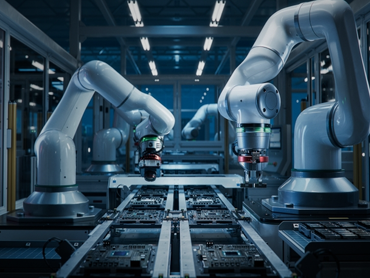
Industrial automation is an umbrella term for technology used to execute repetitive processes, ranging from simple software workflows and fixed conveyor lines to complex machinery. Robotic automation specifically involves programmable, multi-axis physical robots (such as articulated arms or COBOTs) that can be reprogrammed to perform diverse physical tasks like welding, palletizing, or pick-and-place operations. Robotiq's Blog
When should a manufacturer choose an SPM over a standard robotic automation system?
A manufacturer should opt for an SPM when high-speed production, high-volume dedicated output, or complex specialized tooling is needed for a single non-changing product design. Robotic automation systems are preferred when high flexibility, adaptability to multiple product variations, or frequent task reprogramming is required across the line.
What are Collaborative Robots (Cobots), and how do they fit into SPM design?
Collaborative Robots (Cobots) are flexible, light-payload robots equipped with safety sensors designed to safely operate alongside human workers without physical safety fencing. Integrators often incorporate Cobots directly into custom SPMs to handle flexible material handling or delicate assembly tasks alongside fixed tooling.
What are the key stages involved in developing a custom Special Purpose Machine (SPM)?
Developing an SPM starts with feasibility studies and process analysis, followed by mechanical design, electrical/PLC architecture, software programming, component fabrication, physical assembly, system testing, site installation, and final commission.
How do vision systems enhance both SPMs and robotic automation?
Industrial vision systems act as the "eyes" for both SPMs and industrial robots, using smart cameras and optical algorithms to inspect defects, verify assembly quality, measure dimensions, and guide robotic end-effectors to accurately pick and place randomly oriented parts.
What is the typical Return on Investment (ROI) timeline for automated robotic and SPM solutions?
The ROI for automated systems generally ranges between 12 to 36 months, depending on capital expenditure, line speed improvements, material yield increases, and direct labor savings. Long-term benefits also include lower error rates, consistent quality output, decreased downtime, and better floor space utilization. OTC Industrial Technologies
If you have any questions let us know
Do you have any questions? Write and our specialists will answer you.